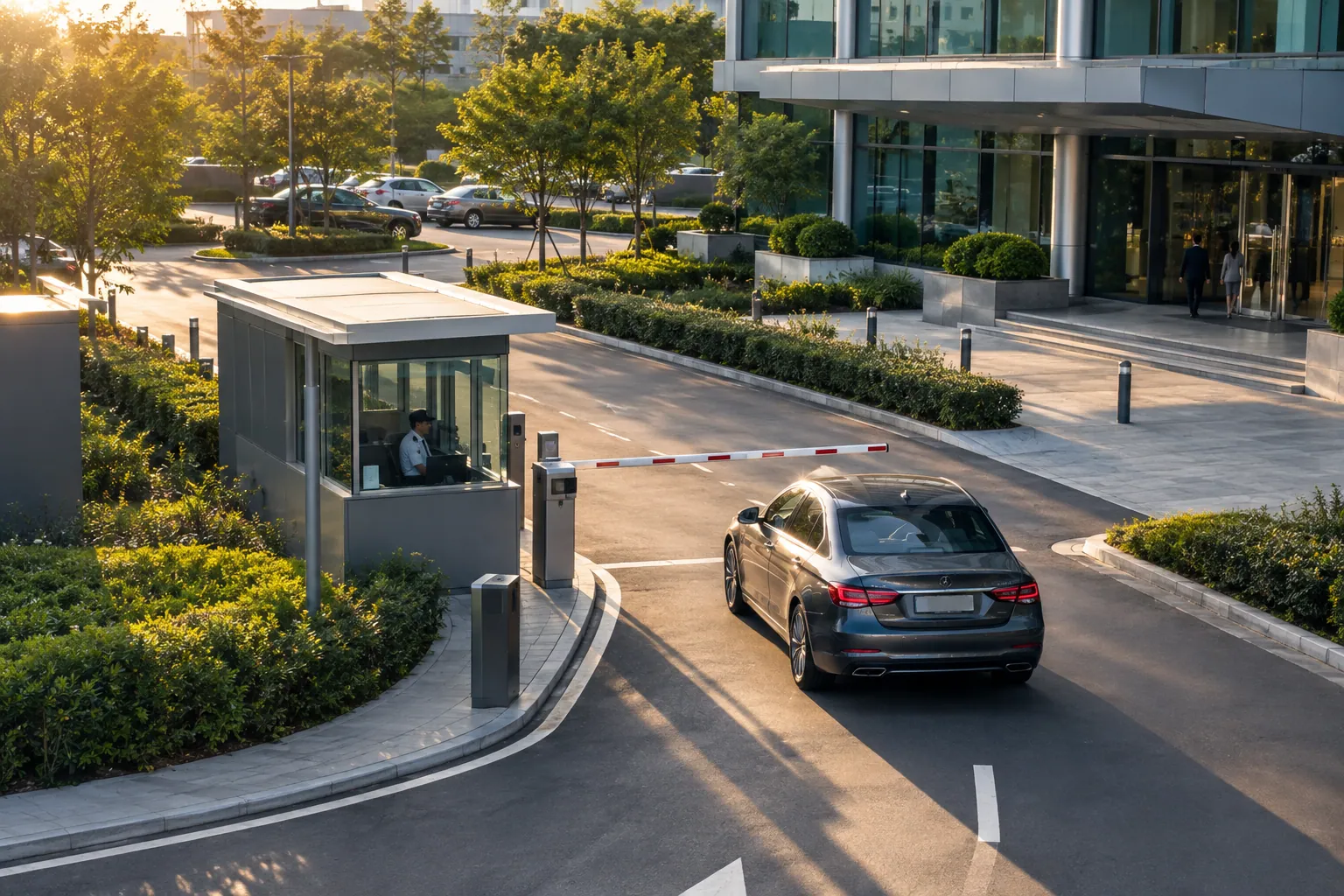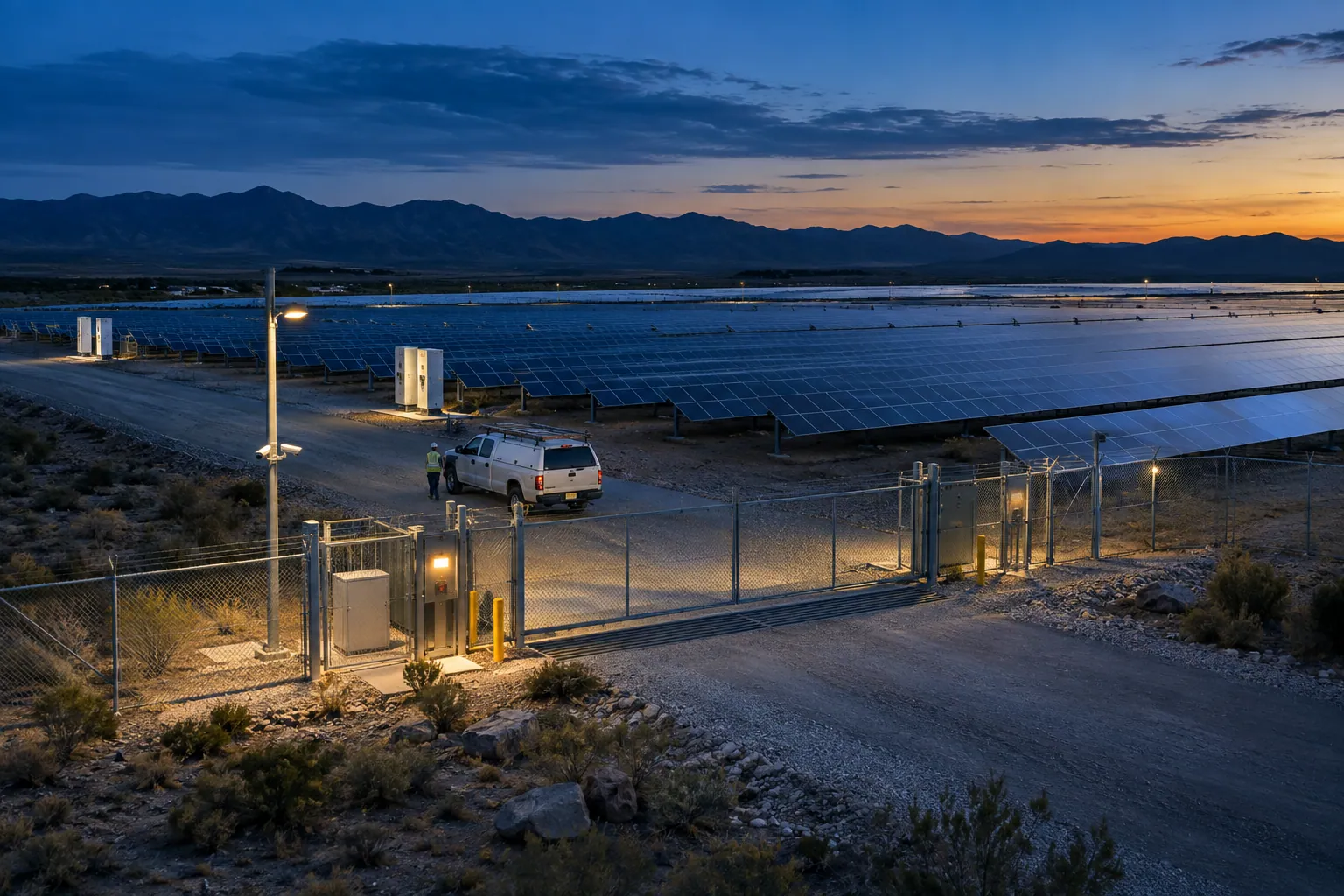
Illustrative scenario — not a customer deployment. The workflow is proposed; no measured results are claimed. Site compatibility, detectors and workflows would be validated during scoping.
01 / THE OPERATING CHALLENGE
What needs a clearer view?
Consider a utility or renewable-site operator with existing cameras at several gates and equipment compounds. Authorized teams need to review contractor visits and after-hours activity across locations.
Separate site recordings can make it hard to identify which activity deserves attention. A movement alert may lack the location context or authorization information needed for a meaningful response.
Remote views also vary in lighting, connectivity and coverage. A team needs to know when the available footage is insufficient rather than assume that a quiet alert queue means nothing happened.
02 / HOW iOn WOULD HELP
Connect the view to the workflow.
Scope the selected sites and views
Review stream access, camera health, permitted activities and the site response process. Define which gates and perimeter zones are suitable for the pilot.
Configure site-specific review conditions
Use configured perimeter zones, after-hours schedules and vehicle candidates where the view supports them. Bring events and camera-health context into the multi-site Command Center.
Route evidence to the accountable team
Link candidates to site, location and source footage. Authorized staff can verify whether activity matches planned work and follow the organization’s response procedures.
03 / AN ILLUSTRATIVE EVENT
From a signal to a human decision.
Camera signal
Activity appears within a selected compound zone outside its configured operating schedule.
iOn context
An operator receives a candidate with location and footage, alongside available camera-health context.
Human action
The operator checks planned work and authorization, reviews the evidence and determines whether to contact the site team or follow the established response procedure.
Example sequence only. No live feed, customer incident or recorded outcome is shown.
04 / MEASURE BEFORE YOU EXPAND
What would make the pilot useful?
Agree definitions and a baseline before starting. Review uncertainty and other operational changes alongside any observations.
Time to verified review
Compare candidate and review timestamps for events within the agreed pilot scope.
Does relevant activity reach the appropriate operator?
Authorized-event filtering
Review how permitted contractor visits and planned work appear in the candidate queue.
Are schedules and zones aligned with normal activity?
Camera availability
Track stream-health visibility and documented coverage gaps.
Does the team know where reliable visual context is unavailable?
Evidence retrieval
Time retrieval of footage for selected site-access enquiries.
Can authorized teams reconstruct the visible sequence?
Proposed evaluation measures. No numerical target or achieved improvement is asserted.
05 / READINESS & LIMITATIONS
Be clear about what the camera can tell you.
What the site would need
- Accessible feeds, defined site zones and authorized operating schedules.
- A multi-site review owner and clear site-response contacts.
- Agreed retention, remote access and evidence-handling arrangements.
What this scenario does not claim
- The platform does not replace electrical protection, process sensors, emergency systems or trained responders.
- Connectivity and camera coverage limit which events can be observed.
- No prevented-intrusion count, response-time reduction or security guarantee is claimed.
06 / THE PILOT PLAN
Start with a defined question.
Select a limited group of views for a scoped 7-day pilot. Validate normal and exceptional activity through safe, authorized review, and agree how coverage gaps and uncertain candidates are recorded.
Extend to additional sites when the operator workflow is useful, coverage limitations are understood and the response process is owned by the appropriate team.
Custom quote. Scope and commercial terms are agreed before commitment.