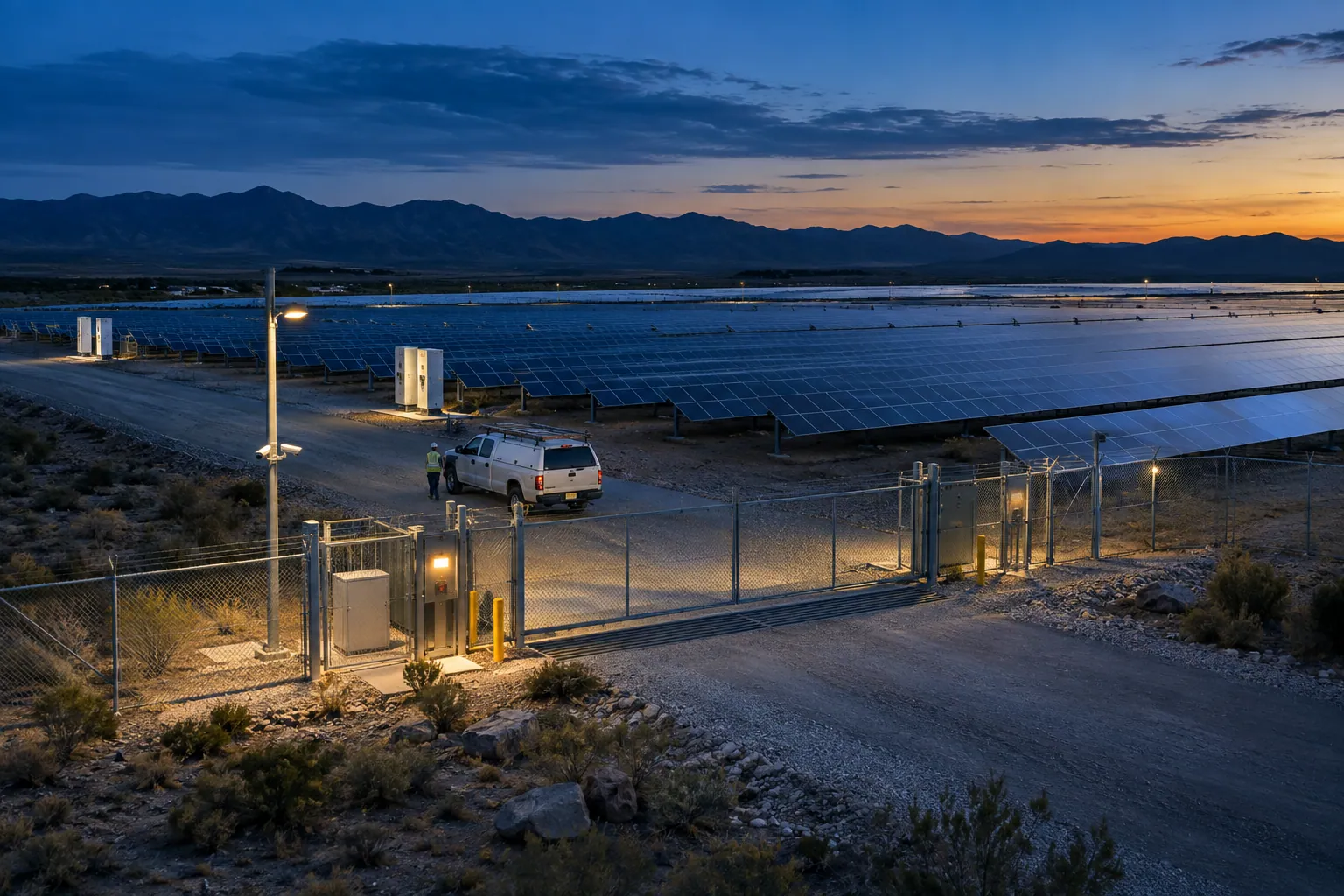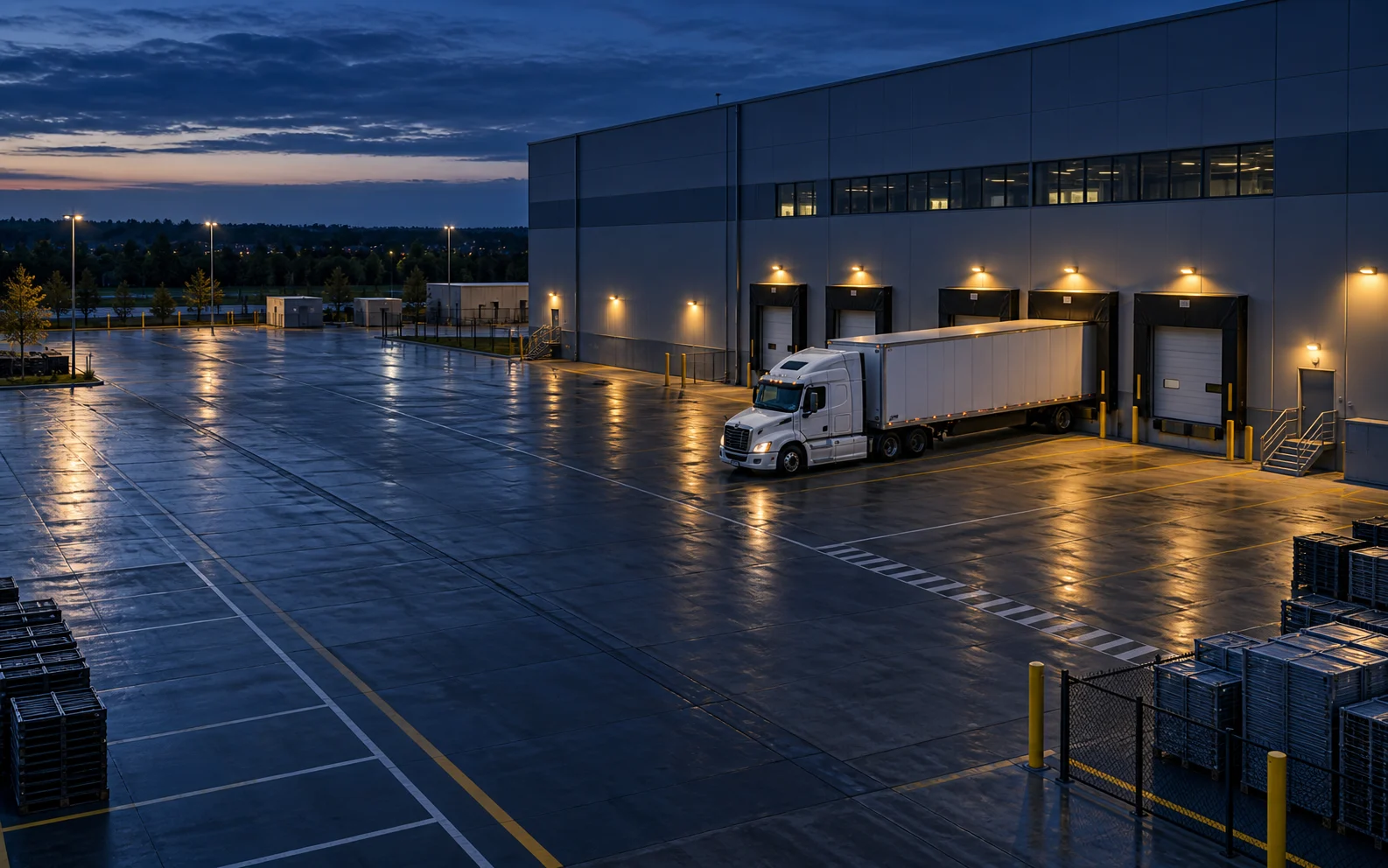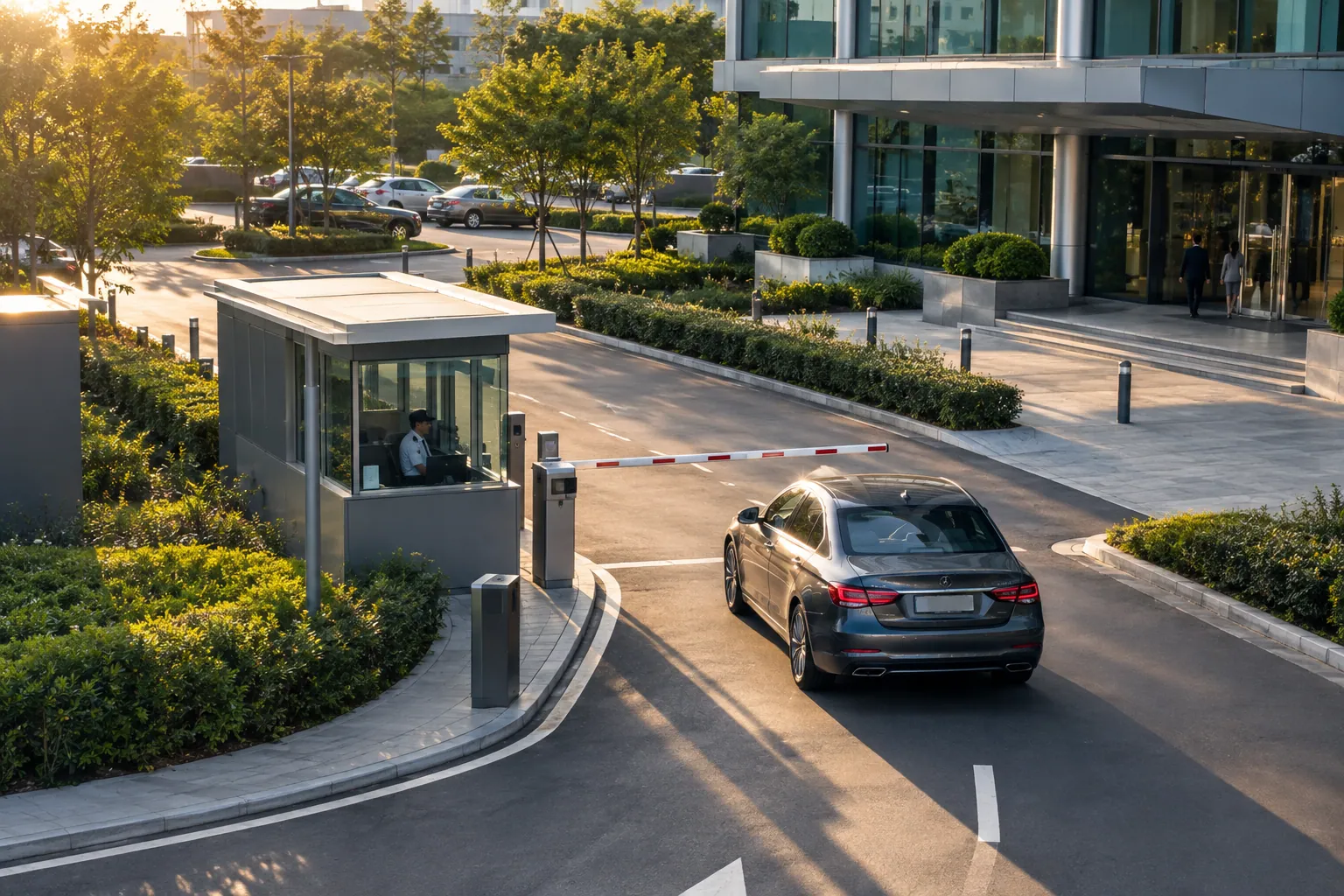
Illustrative scenario — not a customer deployment. The workflow is proposed; no measured results are claimed. Site compatibility, detectors and workflows would be validated during scoping.
01 / THE OPERATING CHALLENGE
What needs a clearer view?
Consider a gated property with an existing entrance camera and a team responsible for residents, visitors and deliveries. The team wants more useful arrival context and a reviewable record of vehicle movement.
A vehicle arrival may require staff to search separate visitor records while other vehicles wait. Later questions about a delivery can require manual review of gate footage.
Low light, an angled view or an unreadable plate can make a matching decision uncertain. The system must preserve that uncertainty instead of silently treating a guess as authorization.
02 / HOW iOn WOULD HELP
Connect the view to the workflow.
Validate the entrance view
Check whether the existing view supports plate candidates and entry/exit events under the intended operating conditions. Identify when an operator needs a manual fallback.
Connect the configured access workflow
Scope ANPR, resident/visitor distinctions and supported QR permit workflows with their lifecycle and access rules. Confirm the required gate integration rather than assume compatibility.
Present arrival context
Link available vehicle events with the configured records and source footage. Gate automation, if included, follows agreed access rules; consequential or uncertain decisions remain with authorized people.
03 / AN ILLUSTRATIVE EVENT
From a signal to a human decision.
Camera signal
A vehicle arrives in the configured entry zone; the camera may or may not produce a readable plate candidate.
iOn context
The gate operator sees available vehicle context and the relevant permit or review status. An unreadable plate stays unreadable.
Human action
The operator verifies authorization using the property’s procedure and chooses the appropriate access action or manual fallback.
Example sequence only. No live feed, customer incident or recorded outcome is shown.
04 / MEASURE BEFORE YOU EXPAND
What would make the pilot useful?
Agree definitions and a baseline before starting. Review uncertainty and other operational changes alongside any observations.
Gate processing time
Compare arrival-to-completed-access timestamps where the available events support the measurement.
Does the configured workflow reduce avoidable manual lookup?
Entry/exit visibility
Review event completeness against an agreed sample, including missing and uncertain reads.
Which vehicle movements can the existing camera reliably record?
Exception handling
Track unreadable plates, permit mismatches and manual reviews separately.
Does the fallback work when the system cannot establish a match?
Incident retrieval
Time authorized retrieval of footage for selected visitor or delivery enquiries.
Can the gate team find the relevant arrival context?
Proposed evaluation measures. No numerical target or achieved improvement is asserted.
05 / READINESS & LIMITATIONS
Be clear about what the camera can tell you.
What the site would need
- Authorized vehicle/permit records and a defined access policy.
- Suitable entry/exit views and verified integration requirements.
- An operator fallback and agreed privacy/retention controls.
What this scenario does not claim
- A plate candidate is not identity verification or authorization by itself.
- Gate and permit integrations are deployment-specific.
- No queue reduction or reading-accuracy rate is claimed.
06 / THE PILOT PLAN
Start with a defined question.
Validate selected entrances during a scoped 7-day pilot. Agree how to measure processing, exceptions and event coverage, then review the findings with the property’s operations team.
Proceed when the property can handle uncertain reads, preserve appropriate records and demonstrate a useful operator workflow.
Custom quote. Scope and commercial terms are agreed before commitment.