Illustrative scenario — not a customer deployment. The workflow is proposed; no measured results are claimed. Site compatibility, detectors and workflows would be validated during scoping.
01 / THE OPERATING CHALLENGE
What needs a clearer view?
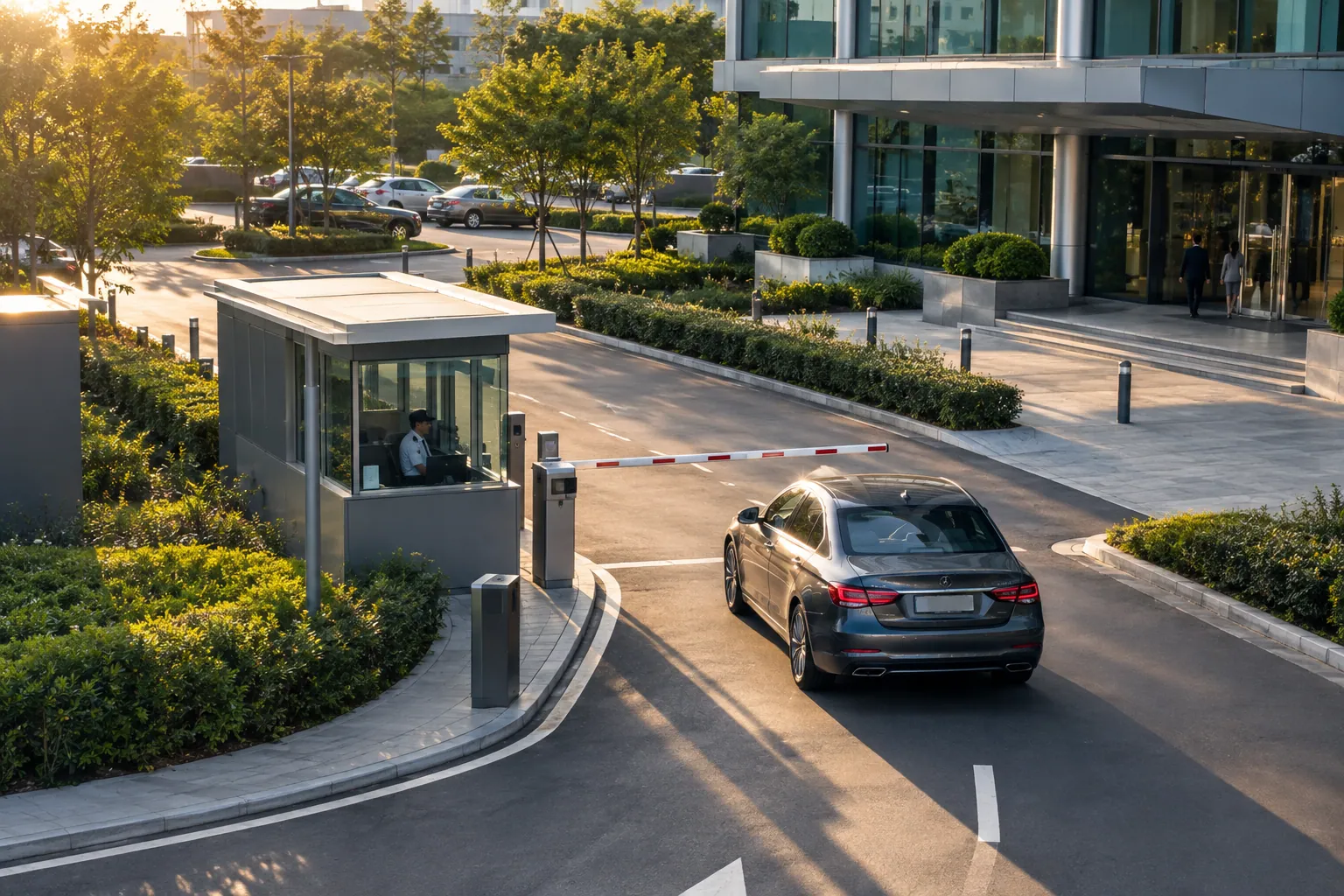
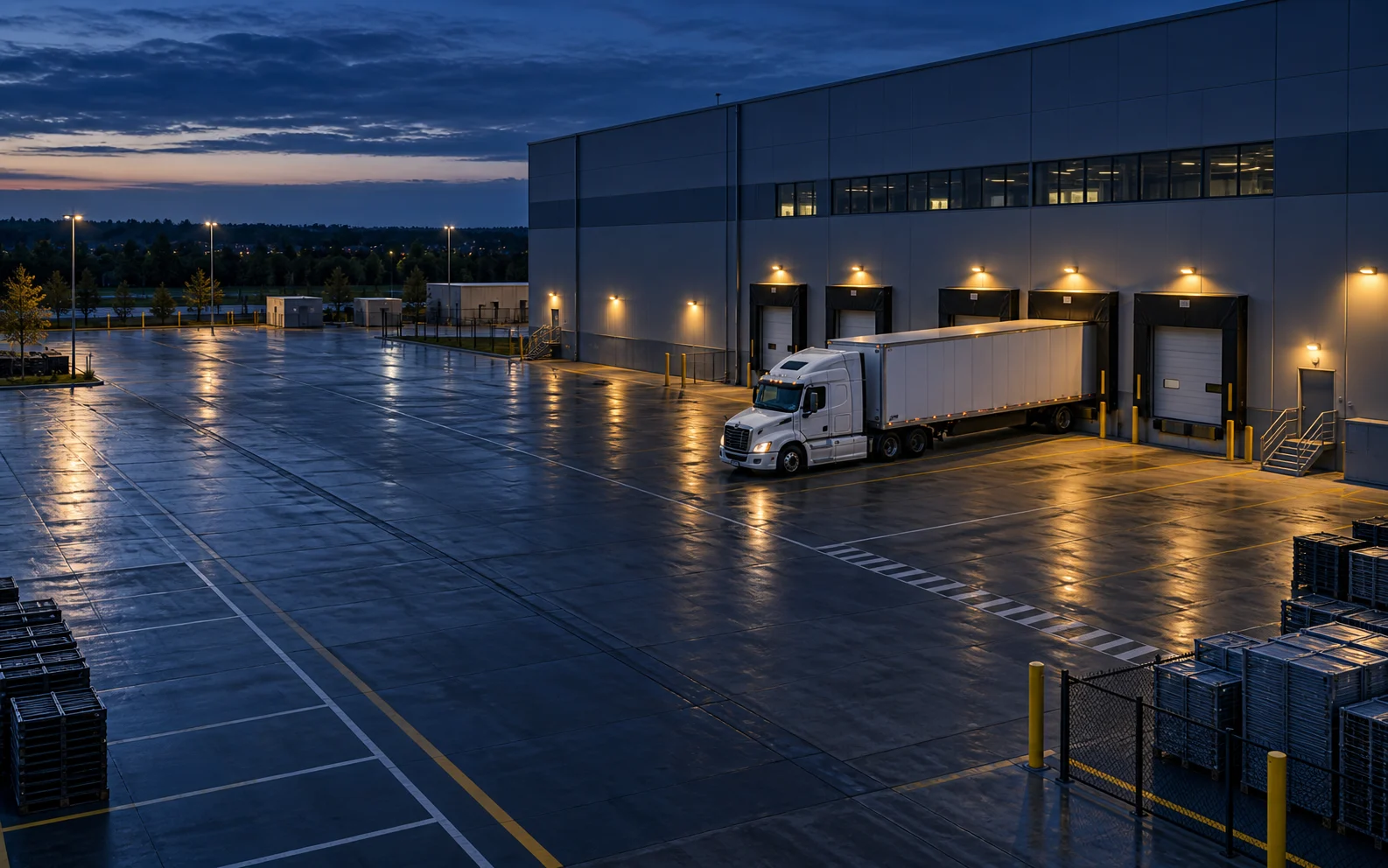
Consider a warehouse with existing cameras at its gate, yard and loading docks. An operations supervisor needs to understand why vehicles wait, while a security team manages gate access.
A departure log can show that a truck left late without explaining where the delay started. A vehicle may wait for a bay, remain at a dock without visible loading activity, or queue at the exit.
Reviewing separate camera recordings after a complaint makes it difficult to distinguish congestion from a loading hold. The team needs relevant footage and context while it can still coordinate a response.
02 / HOW iOn WOULD HELP
Connect the view to the workflow.
Check the view that already exists
Review accessible gate, yard and dock streams. Confirm whether the angle, lighting and resolution support vehicle detection or plate candidates, and identify gaps before defining the pilot.
Configure the operating zones
Define gate and dock zones, relevant dwell conditions and the people who should receive alerts. Connect supported feeds, vehicle logs and indexed events into the Command Center.
Turn a delay into something to review
Correlate available arrival, dock and departure events. Surface a dwell candidate with its camera, location and source footage so a supervisor can check what is happening.
03 / AN ILLUSTRATIVE EVENT
From a signal to a human decision.
Camera signal
A vehicle remains in a configured loading zone beyond the dwell condition agreed for the pilot.
iOn context
A candidate alert links to the relevant footage and available vehicle-event timeline. Uncertain or missing readings stay visibly uncertain.
Human action
The supervisor verifies whether loading is delayed, checks with the dock team and decides whether to reassign a bay or resolve a hold.
Example sequence only. No live feed, customer incident or recorded outcome is shown.
04 / MEASURE BEFORE YOU EXPAND
What would make the pilot useful?
Agree definitions and a baseline before starting. Review uncertainty and other operational changes alongside any observations.
Dock dwell
Compare time between defined dock-entry and dock-exit events; review missing or ambiguous events separately.
Can the team identify which delays are worth investigating?
Yard turnaround
Compare available gate-entry and gate-exit records for matched, operator-verified vehicle events.
Where does waiting occur during comparable operating periods?
Review effort
Record the time needed to retrieve and verify footage for selected loading-delay incidents.
Does linked evidence reduce manual footage searching?
Alert usefulness
Have supervisors mark reviewed candidates as useful, irrelevant or uncertain.
Are the configured conditions surfacing actionable events?
Proposed evaluation measures. No numerical target or achieved improvement is asserted.
05 / READINESS & LIMITATIONS
Be clear about what the camera can tell you.
What the site would need
- Accessible gate and dock feeds with suitable camera coverage.
- An agreed definition of arrival, dock occupancy and departure.
- Authorized reviewers and a retention/evidence plan.
What this scenario does not claim
- ANPR depends on the camera view; an unreadable plate is never fabricated.
- The camera cannot establish the cause of a delay outside its field of view. Staff must verify the operational explanation.
- No turnaround reduction or performance result is promised.
06 / THE PILOT PLAN
Start with a defined question.
Start with selected gate and dock cameras in a scoped 7-day pilot. Agree a baseline, test the event definitions, review candidate quality and compare like-for-like shifts before deciding whether to expand.
Expand only when the team can trust the event coverage, explain the limitations and use the evidence to change a defined operational workflow.
Custom quote. Scope and commercial terms are agreed before commitment.