Illustrative scenario — not a customer deployment. The workflow is proposed; no measured results are claimed. Site compatibility, detectors and workflows would be validated during scoping.
01 / THE OPERATING CHALLENGE
What needs a clearer view?
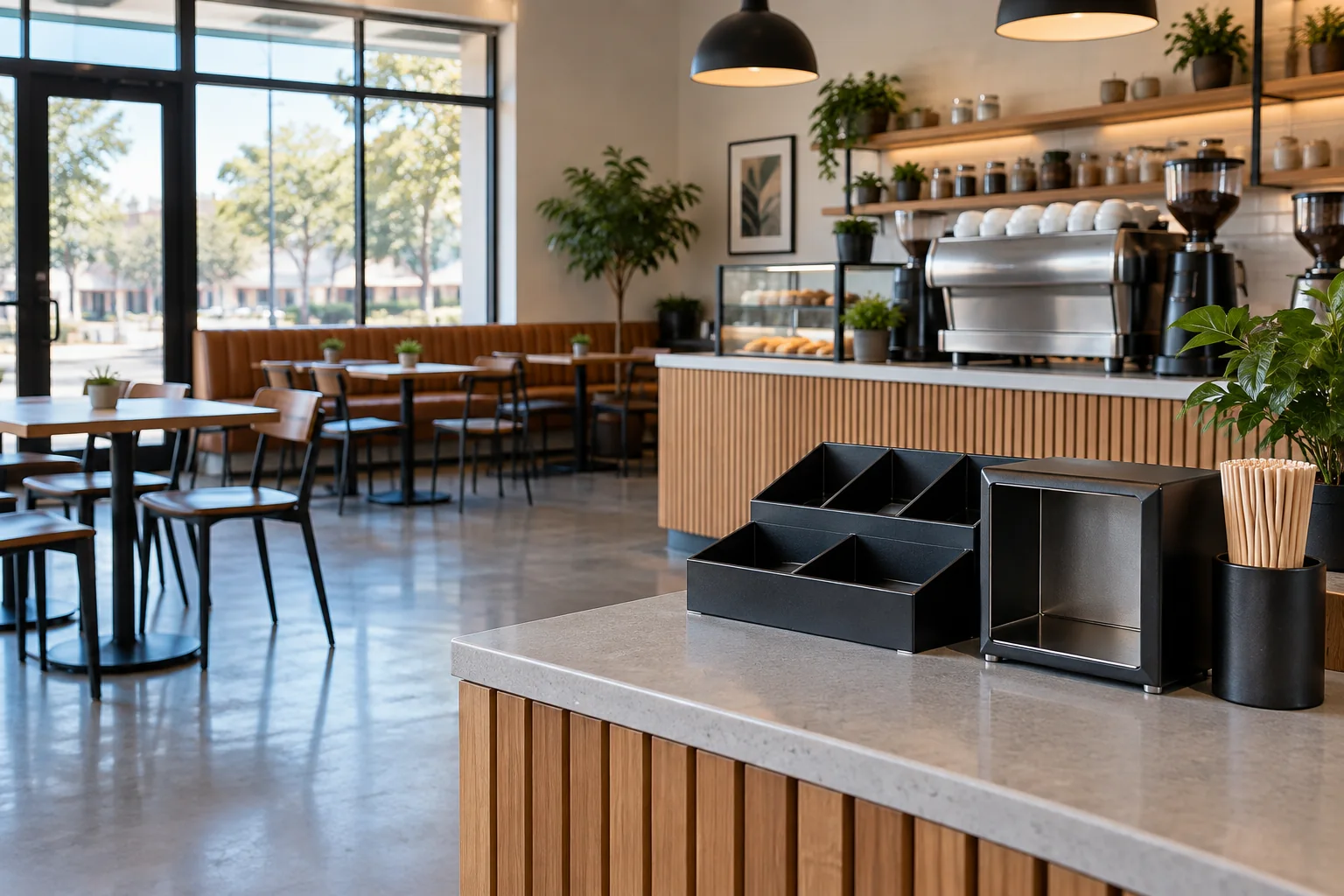
Imagine a small cafe group with a consistent opening routine but different supervisors at each location.
A manager needs a quick way to prioritize incomplete setup without treating every task as a camera-verifiable fact.
A tidy room cannot prove that equipment is working, food temperatures are safe or a door is unlocked.
02 / HOW iOn WOULD HELP
Connect the view to the workflow.
Build a visual checklist
Choose observable items such as table setup and a stocked service station. Keep temperature, access and equipment checks manual.
Show what is unknown
Record each visible item as ready, needing attention or not assessable; never count an unseen item as complete.
Keep the opening sign-off
Send a short exception list to the supervisor, who confirms completion and signs off the full checklist.
03 / AN ILLUSTRATIVE EVENT
From a signal to a human decision.
Camera signal
The configured service station appears unstocked in the pre-opening view.
iOn context
A time-stamped candidate, its location and supporting image would go to the responsible reviewer. Unclear or obscured views stay unresolved.
Human action
The supervisor checks the station, completes the missing preparation and carries out the non-visual opening checks.
Example sequence only. No live feed, customer incident or recorded outcome is shown.
04 / MEASURE BEFORE YOU EXPAND
What would make the pilot useful?
Agree definitions and a baseline before starting. Review uncertainty and other operational changes alongside any observations.
Visible tasks caught
Compare camera candidates with the supervisor’s independent opening check.
Which repeated omissions can the view help surface?
Review effort
Record time spent reviewing the shortlist and unresolved items.
Does the workflow make opening checks easier to manage?
Proposed evaluation measures. No numerical target or achieved improvement is asserted.
05 / READINESS & LIMITATIONS
Be clear about what the camera can tell you.
What the site would need
- Authorized camera access, suitable lighting and an agreed view of the target area.
- A named reviewer and documented privacy, access and retention arrangements.
- A pilot dataset representative of normal conditions, busy periods and visual obstructions.
What this scenario does not claim
- A camera cannot establish sanitation, food temperature or lock state from appearance alone.
- Use the workflow to review tasks, not infer workers’ emotions or productivity.
- Human sign-off remains required; this is not a compliance certification.
Further reading
Concept inspiration: EyePop.ai: Opening Checklist Verification. This is an independently written iOn implementation scenario, not an EyePop customer result, integration claim or endorsement.
06 / THE PILOT PLAN
Start with a defined question.
Start at one location. Collect a baseline, agree event definitions and compare reviewed alerts with independent observations across comparable operating periods. Record false alerts and missed events before considering expansion.
Expand only when reviewers can act on the signals, the evidence supports the agreed performance requirements and deployment safeguards are in place. No measured customer result is claimed.
Custom quote. Scope and commercial terms are agreed before commitment.