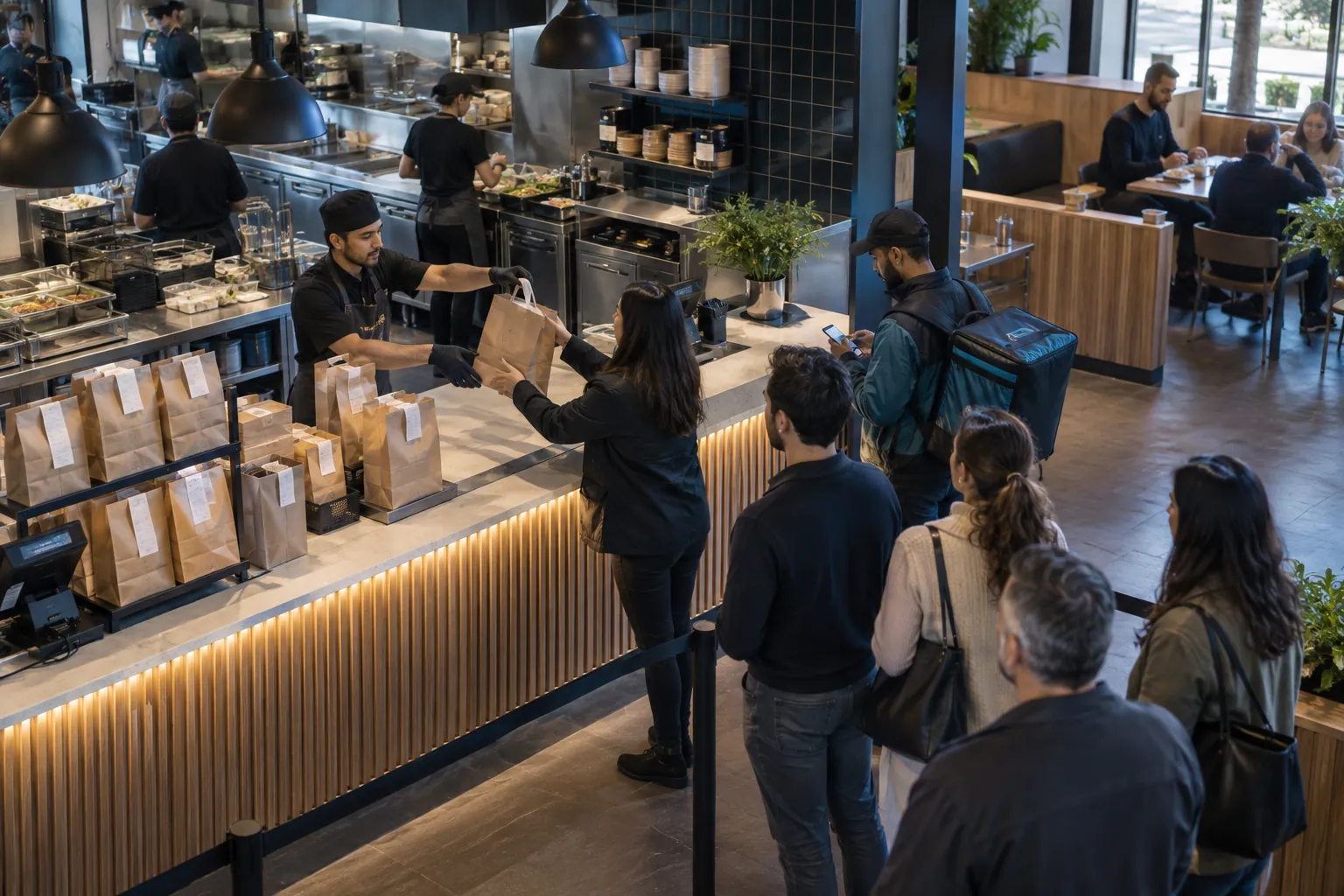
Illustrative scenario — not a customer deployment. The workflow is proposed; no measured results are claimed. Site compatibility, detectors and workflows would be validated during scoping.
01 / THE OPERATING CHALLENGE
What needs a clearer view?
Consider a retail operation with cameras covering entrances, checkout areas and controlled stockroom access. Store managers need to investigate reported loss without treating every movement as suspicious.
A stock discrepancy or reported incident can trigger a long search across cameras. Teams may have an approximate time but lack a clear sequence of activity or the footage needed to review it.
A busy store also produces ordinary movement and legitimate access. An alert without context can distract managers or lead to incorrect assumptions about a person.
02 / HOW iOn WOULD HELP
Connect the view to the workflow.
Scope a narrow review problem
Select specific access zones and incident types the current cameras can reasonably support. Agree what the system should surface and who is authorized to review it.
Index relevant activity
Configure after-hours presence, restricted-area and supported loss-prevention candidates. Retain source context so a reviewer can inspect what preceded and followed an event.
Preserve a clear evidence trail
Bring searchable events and footage together. Use authorized evidence handling and audit controls agreed for the deployment when a manager needs to preserve an incident record.
03 / AN ILLUSTRATIVE EVENT
From a signal to a human decision.
Camera signal
Movement is detected in a configured stockroom access zone outside its agreed operating schedule.
iOn context
The reviewer receives an access candidate with camera, time and source footage, rather than a finding that theft occurred.
Human action
The manager checks authorized activity and the footage, dismisses a legitimate event or preserves evidence for the appropriate investigation.
Example sequence only. No live feed, customer incident or recorded outcome is shown.
04 / MEASURE BEFORE YOU EXPAND
What would make the pilot useful?
Agree definitions and a baseline before starting. Review uncertainty and other operational changes alongside any observations.
Evidence retrieval time
Time comparable incident-review tasks from the initial request to the relevant footage being located.
Can managers find the right context more efficiently?
Candidate relevance
Classify reviewed alerts as useful, authorized activity or unresolved.
Are access zones and schedules tuned to the store?
Evidence completeness
Review whether the selected event has enough camera coverage and surrounding footage for the stated purpose.
Can an authorized reviewer understand the sequence?
Shrink context
Track reported loss using the business’s established process; consider inventory, staffing and other changes alongside any pilot observations.
What can video help explain without attributing every change in loss to the platform?
Proposed evaluation measures. No numerical target or achieved improvement is asserted.
05 / READINESS & LIMITATIONS
Be clear about what the camera can tell you.
What the site would need
- Defined review purposes and authorized store/security users.
- Suitable camera coverage and access-zone schedules.
- A process for preserving evidence and correcting false assumptions.
What this scenario does not claim
- A detection or alert does not prove theft, identity, intent or wrongdoing.
- Blind spots, ordinary customer behavior and staff access can create ambiguity.
- No shrink reduction, recovered amount or customer result is claimed.
06 / THE PILOT PLAN
Start with a defined question.
Use a 7-day scoped pilot for selected access and incident-review workflows. Compare evidence retrieval and candidate relevance against an agreed baseline, with managers reviewing ambiguous events.
Proceed when authorized teams can retrieve useful evidence and explain candidate limits without turning alerts into automatic accusations.
Custom quote. Scope and commercial terms are agreed before commitment.