Illustrative scenario — not a customer deployment. The workflow is proposed; no measured results are claimed. Site compatibility, detectors and workflows would be validated during scoping.
01 / THE OPERATING CHALLENGE
What needs a clearer view?
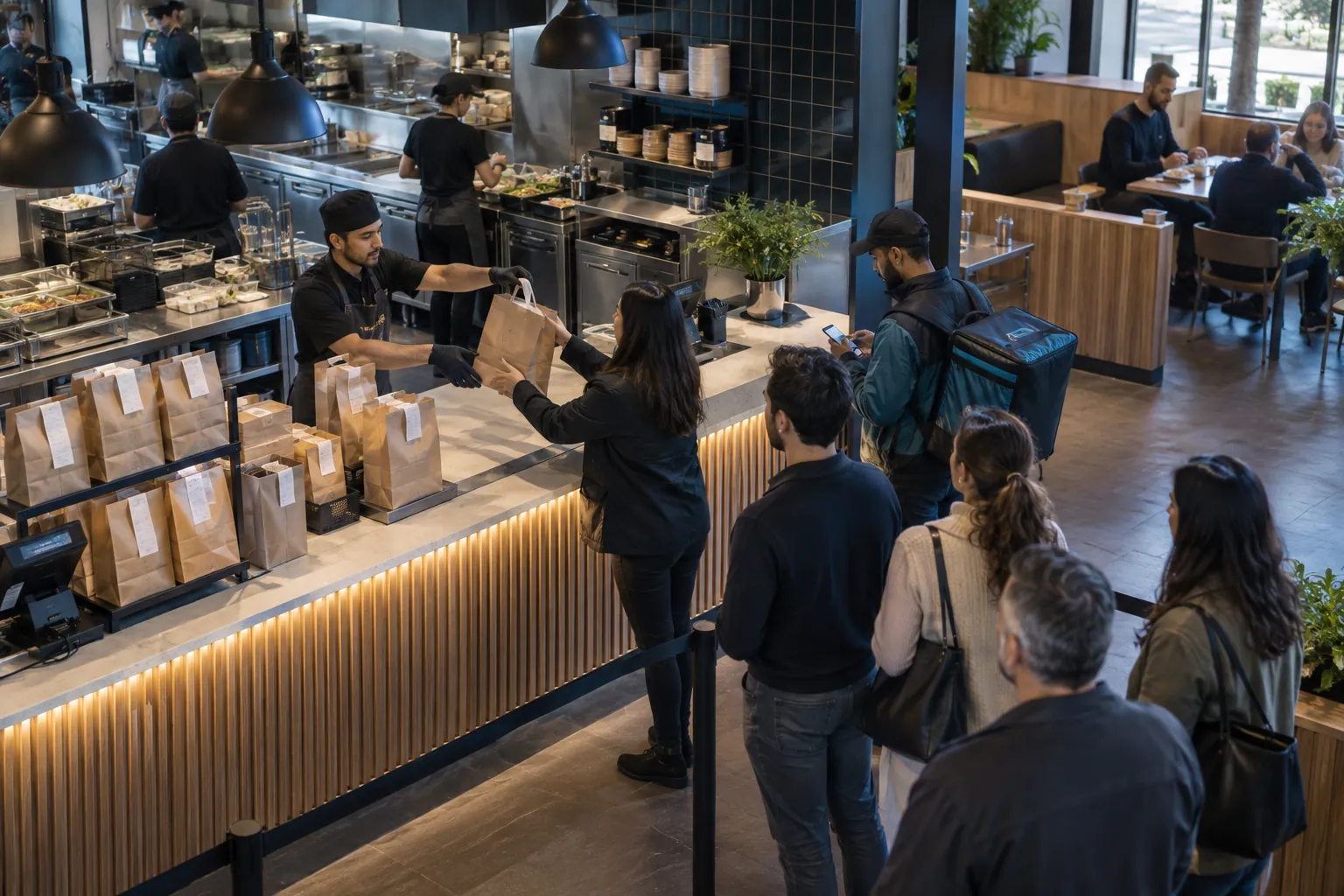
Consider a restaurant with existing cameras covering its customer queue and delivery pickup area. A shift manager needs to understand where waiting builds up during service.
A pickup area can become crowded while the team is focused elsewhere. A later complaint may not show whether the delay was in the visible queue, at handoff or outside the camera view.
A busy-looking frame does not automatically mean a staffing problem. The manager needs a timely signal and enough context to verify whether a change would help.
02 / HOW iOn WOULD HELP
Connect the view to the workflow.
Define the visible waiting areas
Review camera coverage and agree the queue/pickup zones and dwell conditions that make sense for the operation. Keep collection limited to the specified purpose.
Surface a queue or dwell candidate
Configure supported queue and dwell signals. Attach source footage so the manager can distinguish a sustained delay from a brief gathering.
Let the shift manager coordinate
Use verified context to review the handoff process, adjust coverage or investigate a specific incident. Compare similar service periods when evaluating the pilot.
03 / AN ILLUSTRATIVE EVENT
From a signal to a human decision.
Camera signal
Activity in a configured pickup zone meets the queue or dwell condition agreed for the pilot.
iOn context
A candidate alert points the shift manager to the relevant camera and surrounding footage.
Human action
The manager checks whether orders are ready, whether the pickup area is blocked or whether a handoff needs attention, then coordinates the team.
Example sequence only. No live feed, customer incident or recorded outcome is shown.
04 / MEASURE BEFORE YOU EXPAND
What would make the pilot useful?
Agree definitions and a baseline before starting. Review uncertainty and other operational changes alongside any observations.
Visible queue duration
Measure agreed queue events only where the camera covers the defined area.
When do visible waiting periods occur?
Pickup dwell
Review available zone events and clearly separate uncertain starts or ends.
Can the team identify handoff delays within camera coverage?
Review-to-action time
Record when relevant alerts were verified and an operational response was selected.
Does the manager receive usable context during the shift?
Alert relevance
Label candidates as useful, transient activity or uncertain and review settings accordingly.
Are alerts useful enough to support daily operations?
Proposed evaluation measures. No numerical target or achieved improvement is asserted.
05 / READINESS & LIMITATIONS
Be clear about what the camera can tell you.
What the site would need
- Defined pickup/queue areas with adequate existing camera coverage.
- A shift manager able to verify alerts and coordinate changes.
- Comparable service periods and documented measurement definitions.
What this scenario does not claim
- Visible queue signals do not establish kitchen preparation times or order readiness by themselves.
- No food-temperature, contamination or food-safety certification claims are made.
- No staffing reduction, revenue increase or waiting-time improvement is claimed.
06 / THE PILOT PLAN
Start with a defined question.
Use a scoped 7-day pilot around selected service periods and camera zones. Review signal quality with shift managers and separate operational changes from differences in demand.
Expand when managers can explain the alerts, use them during a shift and evaluate comparable periods without attributing unrelated changes to the platform.
Custom quote. Scope and commercial terms are agreed before commitment.